Showing posts with label literature. Show all posts

Sunday, January 24, 2021

Un Amor Llamado Spice Girls

Durante el día de hoy, me voy a remontar un poco a la última (y mejor) década del siglo: los 90. A lo largo de esos años tuvimos cosas maravillosas que aún hoy en día se ven y se escuchan, entre ellas series como "Buffy the Vampire Slayer", películas de Disney como "Aladdin", clásicos tales como "Jurassic Park", y bandas como The Backstreet Boys. 

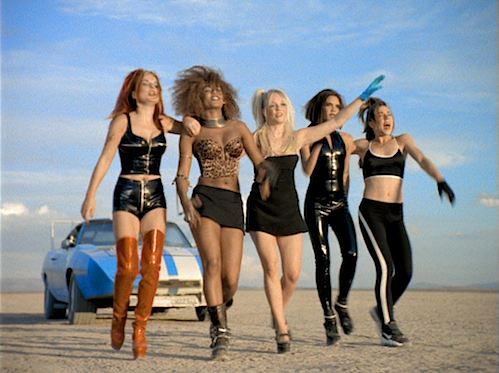
Pero definitivamente, lo que más me gustó de los 90 (aparte del nacimiento de este maravilloso ser), fueron las Spice Girls. Fue la primera banda de chicas que escuché, y su música me ha impactada más que la de cualquier otro artista. Más adelante hablaré un poco más sobre esto. 

Créditos al artista. 

Para quienes no lo sepan, la banda es de Inglaterra y se formó en el 1994, separándose en el 1998. Luego volvieron en los 2000, con varias giras mundiales, cantando en las olimpiadas del 2012, y con promesas de regresar en los siguientes años. Tienen además una película animada en proceso, donde lanzarán viejas y nuevas canciones. 

La banda está formada por cinco integrantes, a las cuales se les dio un apodo en base a sus características; esto es importante ya que así es como las mencionaré aquí. 

💀 Scary Spice- Melanie B. 

Mel B. era Scary por su personalidad ruidosa, 
y por su honestidad. 

🍭 Baby Spice- Emma 

Emma era Baby por ser la más joven del grupo, y 
por su personalidad dulce. 

💓 Ginger Spice- Geri 

Geri era Ginger debido a su color de pelo, 
y ser la más coqueta de la banda. 

👠 Posh Spice- Victoria 

Posh significa elegante, lo cual describe perfectamente
a Victoria, la más seria de las chicas. 

⚽ Sporty Spice- Melanie C. 

Mel C. siempre fue muy atlética y activa, 
ganándose el apodo de Sporty. 

Hoy mi post será dividido en dos. La primera parte es un book tag, el cual se conforma de una serie de preguntas rápidas basadas en el tema del día, las cuales deben ser contestadas con respuestas literarias. Luego, estaré hablando un poco más sobre la banda como tal. Este book tag fue creado originalmente por The Endless Bookshelf en Youtube, así que ahí les dejo el link para que la visiten. 

¡Comencemos! 

Baby Spice: un libro que te haya hecho 
llorar como un bebé.


Fácil- "Kingdom of Ash" de Sarah J. Maas. Este es el último libro en la serie épica "Throne of Glass", y lloré como nunca. Hay 13 razones específicas por las cuales lloré, pero no diré más. El libro es bello y el final te quita el aliento, pero el alma también. 


Wannabe: un libro que no cumplió con las expectativas. 


Para esta pregunta escogí "The Wrath and the Dawn" por Renée Ahdieh. El concepto aquí es una nueva versión de las historias del medio oriente "Las Mil y Una Noches", donde el rey mata a cada esposa nueva al amanecer por una venganza estúpida; en la historia original, su última esposa Sherezade logra salvar su vida contando una historia distinta todas las noches. 

En esta nueva versión, los personajes son más humanizados, especialmente el rey. Se nos da una razón por la cual él hacía sus crímenes. Pero este libro junto con su secuela simplemente se sintió superficiales. Siento que se pudo haber hecho muchísimo más con una historia con tanto potencial. 


Posh Spice: tu libro clásico favorito. 

Pues no sé bien si se considere un clásico, pero amo "Memoirs of a Geisha" por Arthur Golden. Luego de leerlo, me enteré que varias cosas en el libro no son totalmente ciertas en cuestión de la cultura de las geishas; sin embargo, continúo amando el libro con todo mi corazón. 


Say You'll Be There: un libro al cual regresarás 
una y otra vez. 

"His Dark Materials", sin pensarlo dos veces. Tengo planificado leerlo al menos una vez cada año. Vean su adaptación en HBO Max si pueden, quedó hermosa. 


Ginger Spice: un libro con un romance ardiente. 

Pues no sé cuán ardiente haya sido, pero "Carry On" de Rainbow Rowell tiene un romance tan bello. No soy de leer libros de amor, no me gustan; me tienden a aburrir rápidamente, ya que prefiero un libro con romance incluido a uno cuyo tema principal sea el amor. Sin embargo, este fue la excepción. A pesar de que el romance no es su tema principal, acaparó mucho de la trama. Además, fue el primer romance gay que leí, lo cual creo que hizo que me gustara más. 


Spice Up Your Life: un libro que te sacó de una 
depresión literaria. 

La depresión literaria es lo que inglés se llama "reading slump". No es otra cosa que acabar un libro o serie, y quedar tan destruido emocionalmente que no encuentras cómo continuar. O a veces simplemente no te llega la motivación para leer. 

En este caso escogí la serie "The Princess Diaries" por Meg Cabot. Me vale madres que sea una serie fresita. Me distraen y me entretienen bastante, tienen muchas lecciones envueltas, incluyen múltiples referencias a la cultura popular, y son rápidos de leer. 

Y son mejores que la película. 


Sporty Spice: un libro que disfrutraste que 
incluía deportes. 

No estoy seguro de cuán deportivo sea, pero el segundo libro de "Shades of Magic" por V. E. Schwab tiene una competencia mágica entre hechiceros por la mayor parte del libro; se llama "A Gathering of Shadows". ¿Eso cuenta? 


Stop: un libro que consumió todo tu tiempo, o que causó 
que no pensaras nada más. 

Para esta pregunta escogí la trilogía completa de Marissa Meyer "Renegades". En estos libros nos encontramos con un mundo donde los súper héroes sí existen, pero no todos están de acuerdo con ellos. La protagonista, Nova, es una villana; ella piensa que el mundo estaría mejor sin súper poderes, sin villanos y sin héroes, ya que considera que la sociedad se ha vuelto demasiado dependiente en sus súper héroes y que los endiosamos demasiado. 

Los libros presentan muchas ideas filosóficas muy interesantes. Tienen acción en casi cada capítulo, personajes LGBT fuertes, y un romance cliché de enemigos a amantes que me enamoró. 


Scary Spice: un libro con mucha chispa y agallas. 

En los 90, Gregory Maguire decidió escribir "Wicked: The Life and Times of the Wicked Witch of the West", y después de ahí nadie más volvió a ver al mundo de Oz de la misma manera. Esta historia narra el trasfondo de la bruja mala del Mago de Oz, llamada Elphaba. El libro, y sus secuelas, son exclusivamente para adultos. 

Presentan un mundo bien oscuro, con temas serios como la violencia doméstica, el suicidio, fanatismo religioso, violación, anarquía política, bestialismo, tortura, el análisis del bien y del mal, y otros temas. 


Who Do You Think You Are: un libro con un personaje que querías 
darle una bofetada. 


Como ya he mencionado antes, la serie de "Disney Twisted Tales" es una de mis favoritas, y recientemente leí "Straight On Till Morning", el cual es una versión más oscura de Peter Pan. El libro fue bello y lo amé de principio a fin, pero el personaje de Peter Pan... señor. 

Lo que antes me gustaba de él ahora lo encuentro irritante. Sigue siendo un héroe de mi infancia, y sigo amando su historia. Pero definitivamente el mirarlo como adulto cambió mi perspectiva y de verdad había veces que sólo quería darle una cachetada a ver si reaccionaba. 


Culminando la primera parte, paso ahora a la segunda. 

Un amor llamado Spice Girls 

¿Alguna vez has escuchado una canción y sientes que hace click contigo? ¿Sientes que te ha hablado directamente a ti? Eso es lo que siento desde la primera vez que las escuché. Estaba en tercer grado para eso, y una compañera de la escuela trajo la película de ellas, "Spice World", para que la viéramos. Desde ahí el resto es historia.

A lo mejor parezco exagerado, pero créanme que en los días en que peor me siento, la música de ellas es de las pocas cosas que me animan. Sus canciones me enseñaron tantas lecciones, tales como: 

💀 Amarme más a mí, mucho antes de amar a alguien más. 

🍭 Los amores van y vienen, pero las amistades verdaderas son para siempre. 

💓 No importa lo que los demás piensen de ti, sólo cómo tú te sientes contigo mismo. 

👠 Una vida sexual saludable y responsable no tiene nada de malo. 

⚽ Disfruta cada momento, cada risa, cada lágrima, cada triunfo y cada derrota. El tiempo no regresa.

💓 No abandones tus amistades por una pareja. 

💀 No temas ser tú mismo; las personas correctas te amarán, así como eres. 

👠 Lucha por siempre ser la mejor versión de ti mismo. 

🍭 Los límites son importantes; no le aceptes estupideces a nadie. 

⚽ Los malos tiempos no son eternos, y no tomes por sentado los días buenos. 


Desde niño hasta el día que muera, seguiré siendo un fan de las Spice Girls. Por Geri, Melanie B, Emma, Melanie C y Victoria; por su poder femenino, y por la lección de amistad y positivismo que nos han dado. Salud 🍹

Créditos al artista. 


P.S. Hay pruebas en internet para ver cuál Spice Girl eres. Siempre me sale Geri, pero mi favorita es Victoria. 

Sunday, November 22, 2020

The End of Percy Jackson

This week, I finally got my hands on "The Tower of Nero" by Rick Riordan. This book brought to conclusion the "Trials of Apollo" series and also the story of Percy Jackson in general. I read it in a couple of days, and I even took a break from school work a whole day just to complete it. Let me tell you... this book wrecked me. 

Before we go into how it emotionally destroyed me, let me give you a quick introduction to it. As I previously stated, "The Tower of Nero" is the last of a series, which is the third in the Percy Jackson story. In the "Trials of Apollo" the mentioned god is turned into a human by his father Zeus, as a punishment for something he did in the previous series. Now Apollo has taken the form of a mortal, with no powers or immortality, and he is made the slave of a little daughter of Demeter called Meg (who is the cutest thing to ever grace a book). 

Credits to Cookie Creation from Tumblr. 

Not only is Apollo a mortal slave, but he must also stop Python, a giant snake of ancient times who has taken control over Apollo's oracles, and with that it could control the very future itself. Not only that, but three ancient, evil Roman emperors are back: Nero, Caligula and and Commodus. They all have one intention: rule over all and kill Apollo. The latter must then rely on demigods, the ones he used for his own benefit in the past, to survive and get his godhood back. Apollo must also learn to be more human, feel compassion and empathy for once in his life, strive without the help of his godly family, and come face to face with the harm he has done as a divinity. 

Nero is a disgusting prick. 

The first time Apollo slayed Python. 

Now, as for "The Tower of Nero" itself, here's a quick review divided between the things I liked and the things I didn't. 

Things I liked: 

First of all, I really liked the writing style. I believe Rick Riordan is a masterful storyteller, and he knows exactly how to make you feel excitement, sadness, joy and desperation all in a couple of pages. The story flowed naturally, and there wasn't a single moment where the story lost its fast pace. The moments of personal reflection and internal monologues were not forced, the action sequences were amazing and so well written, and the emotional moments were (although short and simple) sad enough to shed a tear or two. 

These are the rest of the books in the series. 

Second, the characters were EVERYTHING! They are truly the heart and soul of this book and the rest of the series. Apollo has some major character growth in this series, but this book really cemented his development and the irrevocable truth that Riordan is an expert at character development. You can see how Apollo came from being a selfish, narcissistic and shallow god to someone with real feelings; he became considerate with others, he showed remorse for his mistakes, and he learned how to stay away from his toxic family. He learned to put some healthy boundaries between him and many relatives, which was great to read. 

Apollo really grew as a person. 
And he's smoking hot, which has nothing to do 
with him being the sun god. 

There was also Meg, the daughter of Demeter I previously mentioned. She was raised by the emperor Nero, who was very abusive towards her. During the series, we have Meg struggling with her feelings for Nero, and with her loyalty towards him. There are many signs of PTSD in her, and also the guilt often inflicted in victims by their abusers. In the last book we finally see Meg coming into her own, separating herself from Nero forever and realizing one important truth: it's never the victim's fault. 

Meg was a whole mood during these books.

This character aspect of the book brings me to the third thing I liked, which was the closure moments. You can see how much Riordan is going to miss his literary children, as he carefully places characters from the past in this last novel. Most major characters made a comeback one way or another, and it felt very natural for me; it didn't come off as forced. The book ends giving a proper ending to everyone, with most of the characters ending in a very good place with a hopeful future. Some wounds will never heal for them, such as losing one significant demigod (I won't spoil who it is), and the characters address this. They will never stop mourning their friend, but the best way to honor a loved one's memory is by not giving up, and by being the hero your friend always believed you were. 


Now, the things I didn't like: 

The book was filled with lots of humor, which is the case with all of Riordan's books. And that humor is typically great, but I feel like it was overdone in this series, and "The Tower of Nero" was no exception. There were some moments where I believe humor was not to be used, or at least not used so much; some moments required more seriousness in my opinion. For example, during the final battle against Nero, the latter punches a wrong button (long story) and instead of destroying everyone, some television screens come down from the ceiling. The characters have to fight each other while listening to Fox news. I really didn't like this, because I feel that it took away all the seriousness and danger this moment represented. 

Apollo as a human. He was known as 
Lester. 

Another thing I also didn't like was the final scene with Meg. Yes, it brought closure, but I was expecting more. The scene was over too quickly for me, and it didn't leave me the bittersweet feeling I was expecting. Don't get me wrong, it wasn't bad. After all, Meg ends in a very good place. But still, I was definitely expecting more. 

Credits to the artist!

The true heartbreaking thing of it all for me was realizing that this is the end. There will be no more books in the Percy Jackson world. This was the last year I waited for a new installment in the story, and the last time I will be reading about Percy and his friends. And of course I can go back and reread the books whenever I want, and revisit this world time after time. But it will never be the same. 

I cried a lot while reading "The Tower of Nero", mostly during the final scenes, the ones that brought closure to the characters. It felt as if I was saying goodbye to my friends, to people I deeply love. I started reading these books in my senior year of high school; I was 16 when I started "The Lightning Thief", and it shook me to the core. The Percy Jackson world was with me throughout college, and during my first years of adulthood. I became a teacher and the books were still coming out, including the two companion series- "The Kane Chronicles" based on Egyptian mythology, and "Magnus Chase and the Gods of Asgard" based on Norse mythology. 

I've been with this story for basically ten years already. Ten years is a lot of time! I've grown with these books, and I've learned so many things from them. They made me feel welcome and accepted, I laughed and cried with them, I came out of the closet thanks to them, and they gave me a safe home when everything around me was falling to pieces. No matter how long I live, where I go, what other books I might read: Percy Jackson will always stay with me.   

And now... what? What does the future hold? "The Tower of Nero" ended in such a way that it's open for the story to continue, but I'm not sure Rick Riordan will go back to it. Maybe he will focus on other stories, other mythologies, new characters. But I don't believe he will return to Percy Jackson. Whatever comes now from him, I'll be here for it. Meanwhile, I'll learn to go on. I may being overdramatic, but it really feels as if I lost a friend. I'll continue reading other books, falling in love with new others, but none of them will be like Percy. 

Credits to Nowhere Little Girl from Tumblr. 

An imaginary toast for: 

Percy- son of Poseidon 

Annabeth- daughter of Athena

Grover- a satyr 

Clarisse- daughter of Ares

Thalia- daughter of Zeus 

Piper and Silena- daughters of Aphrodite 

Nico- son of Hades 

Frank- son of Mars 

Leo and Beckendorf- sons of Hephaestus 

Meg- daughter of Demeter 

Hazel- daughter of Pluto 

Will- son of Apollo 

Reyna- Puerto Rican daughter of Bellona 

Connor and Travis- sons of Hermes

Rachel- oracle of Apollo 

Lou Ellen- daughter of Hecate 

Calypso- a former minor goddess

and Jason- son of Jupiter 

Thank you guys, for being my friends and family when I felt more alone than ever. 


P.S. I need some books on Asian and Celtic mythologies, please. 

Sunday, November 15, 2020

I Read a Book so Sad it Made Me Smile

Recently, I decided to give a try to a children's book. This isn't my favorite type of literature, but I said, "Why not?" If I don't like it, then I don't have to continue with the rest of the series, since this particular book has several sequels. The book I am talking about is "The Bad Beginning", the first installment in "A Series of Unfortunate Events". 

It's a very short book, having 162 pages or so. You can read it one sitting, if you have time, and it's not complicated to understand. I must clarify: don't think that just because it's a children's book it's going to be "dumb" or boring. Quite the contrary! Even though I'm a twenty-something adult and I generally prefer more mature literature, I still enjoyed the novel. Children will probably enjoy it more than I did, but still. It was a pretty cool read. 

Now, I know of some friends who know nothing about this series and its world, and haven't seen the series' adaptations. So, what is it about? 

"A Series of Unfortunate Events" is a series of thirteen books narrated by fictional Lemony Snicket; he's the narrator, not the author. The books tell the misadventures of the three Baudelaire orphans: Violet, Klaus and Sunny. Once belonging to a wealthy, happy family, it all comes to an end when their parents die in a fire that consumes their house and belongings. According to their parents' will, the children must love with their closest relative, which is (supposedly) Count Olaf. 

The Count is a horribly cruel man, who treats the children like slaves. He is verbally, emotionally, and physically abusive with them; needless to say, the children suffer a lot under his tutelage. The Count is after the Baudelaire's fortune, but then he learns that the children won't inherit the money until Violet (the eldest) comes of age. Therefore, Count Olaf starts planning on ways he can have the children's wealth, even if it means murdering them. 

After the children's stay with Count Olaf, and fouling his devious plan to marry Violet and get her fortune, the Baudelaire's move from one relative to another, from place to place, escaping from Count Olaf and his minions. The children face countless hardships and tragedies throughout the novels, and they barely escape with their lives from every danger that comes in their way. 

As for the book itself, there were many things I liked, and I wasn't really expecting to like so many things about it. First of all, the characters. They are truly the heart of the book, including both heroes and villains. The children especially capture your heart from the very first page, as you can't help but feel sorry for them, give them a huge hug and a safe place to stay. 

Violet is the eldest Baudelaire and fourteen at the beginning of the series; by the end of the books, she's sixteen. Violet is distinguished by being a natural leader, a caring person, and also kind, polite and resourceful. She can be headstrong and gets frustrated with adults, and she will always put her siblings first. She's an inventor since a young age, and she's capable of creating many useful things that help her and her siblings escape from danger. 

Klaus is the middle child, and shares a close relationship with Violet. Like his elder sister, he's very protective of Sunny. He is twelve years old by the beginning of the series, and fourteen at the end. Klaus is alike his sister in politeness and kindness; he's also resourceful and strong. He is a very observant boy, who questions everything and everyone, and can be quite spirited. Klaus is an avid reader from a young age, and he read almost every single one of the books that used to exist in his former house; his book knowledge saves the three of them multiple times. 

Sunny is the youngest of the Baudelaire orphans, being around one year old by the start of the series and three around the end. Even though she's only a baby, she is as polite as her siblings, and does a lot of things that a normal can't do, such as: swordfight, being a secretary, and climbing with her own teeth. The latter is her most distinguishing feature; by the beginning of the books, Sunny has only four teeth which are so sharp that can cut through rock. Her siblings have been aided by this biting ability more than once. 

Then of course, there's Count Olaf himself. A devious man full of malice, greed, bad manners and a serious case of disorganization in his house. The Count is the series main villain, and he's always persecuting the Baudelaire orphans to murder them and take their wealth. He uses multiple disguises to hunt the kids, and he murders anyone who comes between him and the children, including their tutors.


 Now that I've talked about the characters, another thing I enjoyed with the book was the language and how it was used. The book is written in a very simple way, so children can understand it. Nevertheless, it's engaging and fun, and it successfully transmits the gloomy atmosphere of the story. But what I liked the most about the language was the vocabulary words. The author uses several words that might not be understood the first time you read them, so he provides a definition of such word and an example within the story. For example: when the children are informed of their parents' death, the informer uses the word "perished". The author makes a quick pause on which he explains what perished means, and writes an example using the book's situation at hand. This particular element for me is fascinating, and very helpful for all readers. 

The third element that I liked from the book was the setting. The world of the Baudelaire children is set in a timeless place. The book has drawings, which represent different types of clothes, objects and architecture from different eras. The story might take place in the 40's, 50's, 90's or 2020 for all we know. This for me is a brilliant thing, as the books never grow old, they are never stuck in one place in history. The setting also has a very gloomy, depressing atmosphere which I adore; the drawings that accompany the story reinforce this gloomy aspect. 

The last thing I liked about the story were the ideas present in it. Yes, the book and its sequels can be quite depressing at times. They have a big amount of darkness in them, and they are not to be taken lightly. I mean, we're talking about a group of siblings who are being continuously hunted by a man who wants to murder them. The children are tortured in many ways, they never find solace, their tutors are murdered one by one, most adults don't believe or help them, they have no place to go, and the only people they can really count on is themselves. But this last idea is what the makes the story so special. 

As I said, the story can be very sad. But it also has some beautiful aspects. One of them is the theme of hope. No matter what happens, the Baudelaire children give each other hope when they need it most, believing that someday they will escape from their trauma and survive despite de darkness that surrounds them. Resilience is also a very big theme in the story; the children use their unique, individual talents to defeat the villains and strive under the circumstances. They never give up easily, and are always ready to fight their monsters. And last but not least, the biggest theme of all is family love.

The Baudelaire kids love each other deeply, They uplift their spirits, give each other a reason to go on, and no matter how cruel the world might be, they don't let that cruelty shape or destroy them. It shows us that family will always be there, that our siblings are people we can count on if we trust them, and that home will always be the brightest place in the world. But where is hope when your house is burned to the ground and your parents die with it? Easy: home is where the heart is. Wherever the orphans may be, as long as they have each other, they will always be home. 

The only thing I didn't like about the book was how short it was! I was surprised to see how much I wanted to go on, and now I can't wait to read the second book, following the unfortunate events that fall upon the children. 

"A Series of Unfortunate Events" has been adapted twice.. The first time was as a movie, and the second one as a Netflix series. I'm not a big fan of both works, but they do have their strengths and weaknesses.

The movie was a terrible adaptation, in the sense that it mixed three books into one movie, and the plot didn't really work. But they captured the timeless setting of the story quite well, the casting was pretty good, and the story as a whole was presented correctly: a sad tale, with tragic heroes and terrible villains. I wasn't a fan of Jim Carrey as Count Olaf, but at least he could look menacing when he needed to. The movie managed to make you feel deeply sad for the children and their situation, which is a success. 

The Netflix adaptation also has a good casting. The children in this version are better suited for their book counterparts, and I like how they act better. The setting looks gloomier, the music is good, and they follow the books a little closer. But there are two things I seriously dislike about the TV series. One of them is the tone of it all. They made the series too funny, too silly, and they dumbed down the tone. Yes, the books have an absurdist element to them, but that doesn't make them a comedy. I hate it so much when children's stories are dumbed down, which is something that Disney tends to do a lot nowadays by the way. At least the movie took the story more seriously; the series is black comedy, and it's not even good. 

The other thing I didn't like about the Netflix adaptation was the casting of Count Olaf. Here he is played by Neil Patrick Harris, and even though he looks the part, he doesn't know how to act it. His Count Olaf is completely preposterous (ridiculous) and stupid. I hate it so much when villains are portrayed that way. Count Olaf is not someone you're supposed to laugh at; he is absurd a lot of times, but that doesn't make him a comic relief. He is a monster in human skin, and Neil Patrick Harris wasn't able to capture that. I believe the fault doesn't fall completely on him, because I think the director and writers have a lot to do with that. But still... his portrayal makes me cringe more than it makes me cheer. Also, why is he practically the center of the series? Yes, he's the main villain, but the protagonists are the Baudelaire orphans, not him. 

In conclusion, I really liked this first book. I think I will continue reading the series, as I'm very intrigued by it. It's the first time a children's book gets me excited to read more, even when I was a kid. I don't plan on continuing watching the Netflix series though. I don't like wasting my time on things I know I'm not going to like. I'd rather read the books, and no let the adaptation ruin the experience for me. 

If you are interested in books about: orphans, horrible villains, bad actors, giant snakes, wide windows, ladies obsessed with grammar, mysterious societies, incompetent adults, miserable mills, an austere academy, an inventor, a reader and a biter- then these books are for you. But fair warning: there is no happy ending, and very few happy things in between. If you're like me, this is exactly the type of story you're looking for. 

P.S. I wish I could adopt the Baudelaire children. Those three deserve a break. 


Libros que leí en el 2022

Tristemente, no pude leer tanto este año como en los anteriores. Fue un año sumamente ocupado y retante, entre nuevas experiencias, desafíos...